
We’ve Got Mail

Join us for an evening of fun, laughter and reflection with letters from villagers and others LIDDINGTON VILLAGE HALL 14 November at 7:30 for 8:00pm. Café Paris style – you won’t believe it’s the Village Hall. Ambitious, yes, but we’ll give it a go! Small, cosy tables with candles, lights, flowers Special effects & music Quality draft beer and good wine We guarantee moments of Aw, Laugh out loud, Sadness, Outrage. Click here to book! Letters read by villagers: Girl aged 5 writes to Queen Elizabeth asking for a horse Letter from Africa 53 years ago announcing a birth Letter delivered by Kevin 40 years after posting Interview with Kevin, our village Postie Letters from the famous and infamous: From Steinbeck to his son about falling in love Queen Mother to Queen Mary about bombing of the Palace Outrageous complaint letters Dancing in the intervals while watching Elvis Live, and lots more . . .
Gourmet Burger at Village Inn
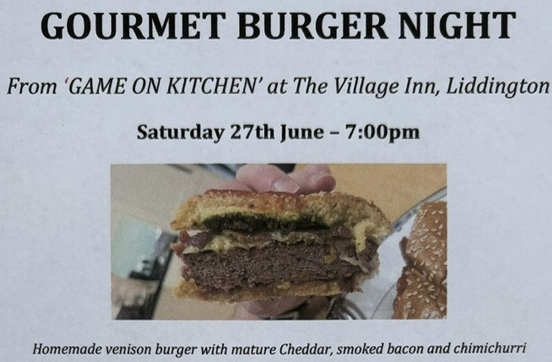
We want our local pub, The Village Inn, to thrive. A pub closes in England every day, a shocking statistic. If our local goes, that’s the focal point of the village gone. We got the support of Adam, the pub landlord, and set up a volunteer group – four retired guys and five women with attitude. The flowers in the pub are now changed every Friday which gives the place a lift. Adam and his team set out a restaurant -style room at the back of the pub and each table is laid out to a high-dining standard. During this year we have plans for more four-course gourmet meals. We’re not trying to change the world but with support from villagers, guests and volunteers we’ll do what we can for our pub. There’s only one poem for that, with a nod to the poet, Flann O’Brien. When things go wrong and then go right For you’ve done the best you can, When life looks sweet at close of night A pint of plain is your only man. When service is done and the kitchen’s clean And your faces are pale and wan When punters say “it was a fabulous meal” A pint of plain is your only man.
Gourmet Game at Village Inn
We want our local pub, The Village Inn, to thrive. A pub closes in England every day, a shocking statistic. If our local goes, that’s the focal point of the village gone. We got the support of Adam, the pub landlord, and set up a volunteer group – four retired guys and five women with attitude. The flowers in the pub are now changed every Friday which gives the place a lift. Adam and his team set out a restaurant -style room at the back of the pub and each table is laid out to a high-dining standard. For a Saturday evening in March we advertised a four-course Gourmet meal. It sold out in a few days. David did three nibbles, the gourmet starter and the main course of pheasant. Maurice was David’s commis chef and he also focused on a full array of vegetarian dishes and an olive oil chocolate cake for dessert. We’d an anxious dry run for friends earlier in the week which gave us confidence. We managed the kitchen professionally on the evening, aimed high to a Master Chef standard. The guests loved it, agreed it was a big success, offered encouraging feedback, and it was very profitable for the pub. During this year we have plans for more four-course gourmet meals. We’re not trying to change the world but with support from villagers, guests and volunteers we’ll do what we can for our pub. When the gourmet meal was finished, we left a spotless kitchen and had a pint of Guinness on the house. There’s only one poem for that, with a nod to the poet, Flann O’Brien. When things go wrong and then go right For you’ve done the best you can, When life looks sweet at close of night A pint of plain is your only man. When service is done and the kitchen’s clean And your faces are pale and wan When punters say “it was a fabulous meal” A pint of plain is your only man.
Cleaning
Based in Liddington Village in Wiltshire Contact Lisa: +44 7895 418113 Email: thetidytouchcleans@outlook.com
AirBnB Detached Cottage
Little Hardings A spacious, very homely house in an elevated position, tucked away in the village of Liddington. Just 5 minutes’ drive from J15 of the M4 & 15 minutes by taxi from Swindon Railway Station. The ancient Ridgeway is on the doorstep, as are the Iron Age Hill Forts of Liddington and Barbury Castle. Conveniently located to explore the Roman City of Bath, Cirencester, Hungerford, Marlborough, Salisbury, Caen Hill Locks, The Cotswolds etc. London Paddington is one hour by train. The Space Little Hardings is a newly renovated house which guests have entirely to themselves. The house is deceptively large inside and provides a large area for relaxing. AirBnB Click the icon below to visit AirBnB listing.
Meadowbank House
Meadowbank House Bed and Breakfast Meadowbank House on Medbourne Lane has three double rooms with spacious king size beds, beautiful Egyptian cotton bed linen, fresh flowers and delicious food for anyone looking for a base for extra visitors or needing accommodation near Great Western Hospital and Swindon. Jane and Matthew enjoy welcoming their guests and anticipating how to make them feel at home whether it is an overnight stay or several weeks while working locally. They buy ingredients locally where possible, have eggs from village chickens, bacon and sausages from Sumblers butchers and fruit from their allotment.
Local Artists on Display
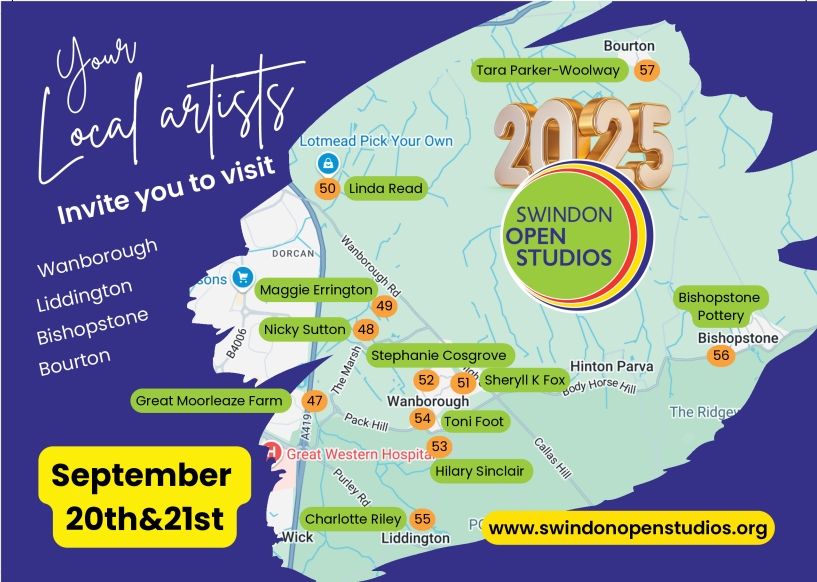
Swindon Open Studios 2025 – Opportunity to visit your local artists Swindon Open Studios is a free community arts event, offering the public the opportunity to visit artists’ studios, workshops and exhibition spaces in September. During the weekend of 20th and 21st September local artists from Liddington, Wanborough and Bishopstone are opening their studios to you. Your local artist in Liddington is Charlotte Riley, a contemporary painter creating landscape inspired original art. She will be open from 10 – 4pm on 20th & 21st September (1 Lidenbrook, Liddington.) For more information about Swindon Open Studios [20th, 21st, 27th, 28th September] visit www.swindonopenstudios.org You can also visit Sheryll Fox, Nicky Sutton, Maggie Errington, Hilary Sinclair, Stephanie Cosgrove, and Toni Foot in Wanborough. Along with host, Jo Bains who will have 6 artists showing their work at Great Moorleaze Farm. And if ceramics are your thing, you’ll want to make a trip to Bishopstone Pottery. A warm welcome awaits you from all the local artists, who will be in their studios and on hand to chat about their tools and materials, inspiration, processes and the stories behind their work. From discovering original art available to purchase, exploring creative processes to supporting your local artists and enhancing your art knowledge, open studios is great way to connect, support and meet the artists living and working in your local community.
Wellspring Villages
St. Andrew, Wanborough All Saints, Liddington St. Swithun, Hinton Parva St. John the Baptist, Bishopstone
Village Meeting Room
Around the Village
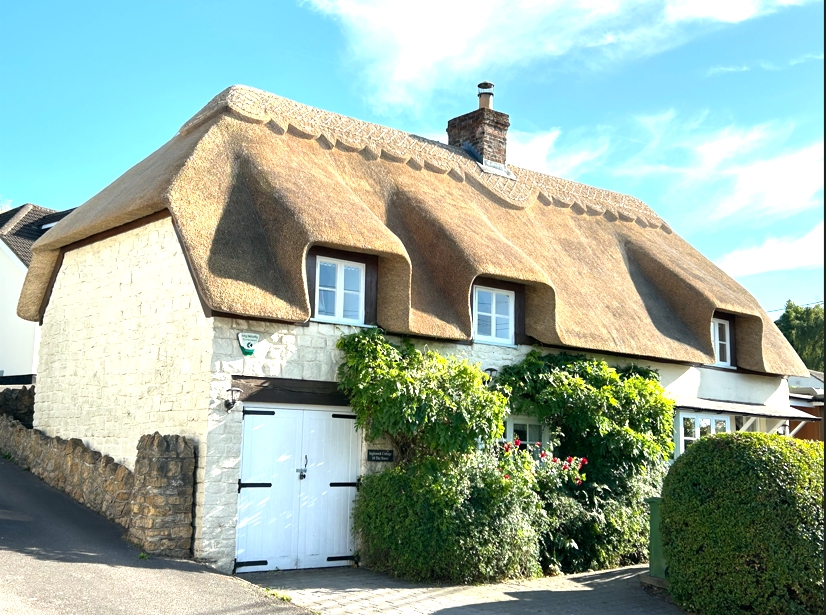
Distance 4k This is a short walk that every villager has done at some stage. However, I’m encouraging you to take longer this time, to stop and look around. The village has old buildings and a church, a graveyard and lanes, the places where history and stories are hidden for the most part. This is an opportunity to share with a visitor to the village, as there’s nothing like a good story to enhance a walk. Where to start? The Green is the oldest area in the village. The village was originally focused around the triangular old “Green” to the east, now bordered by some of the earlier village cottages, and extended to the west to All Saints’ Church and Parsonage Farm. The Green was located at the junction of the ancient long distance east-west route known as the Icknield trackway and the north-south route from Swindon to Hungerford, named The Street. Three beautifully thatched cottages invite you up the short road. The 7th Duke of Marlborough, a black sheep who courted controversy, sold these houses to residents in 1877 to settle debts on Blenheim Palace. In the past the Green was the common between the houses until someone put up a fence and then everyone followed. The first house on the right has a layout that shows where horses were stabled and was probably a smithie as well. The next house #17 was built in the grounds of #16 by Joel Joffe (more about Joel later) for his sister but she never emigrated from South Africa. At the top of the road, Cobblers’ Cottage #18, was actually two cottages. Cobbling was undertaken here for a wide customer base across Swindon. Around the corner at the top are two modern houses. Turn around and follow the lane to the Village Inn. This lane has the honour of being the shortest public way in the village. The houses on the right are owned by Arkell’s Brewery, as is the pub. The Village Inn was originally called The Bell and there is a hint to its former identity in the road in which it stands – Bell Lane. In fact, the first Bell stood on the other side of the road before the owner, John Whitling, put up the present building in 1875. The original building, which dates back to at least 1789, was demolished in 1894. After several changes of ownership the pub was eventually renamed in 1982 and Arkell’s bought it in May 1994. But first, admire the old signpost which is slowly giving up the ghost. A recent bit of amateur engineering has given it life for now. The Parish Council have agreed to replace it, like for like. On the far side of the hedge is an old farmhouse. You can get a better view from the entrance. Mike Dixon was the last farmer there. When he retired the house was renamed Rhodes House, and the less said about that the better. In the middle of the junction is the Toll House. The main road from Swindon to Aldbourne passed to the right of the house and tolls were taken through a window. This road was turnpiked in 1813. The Toll house was built at its junction with Icknield Way, with toll gates across both roads. Traffic was horse-drawn in those days, moving at a more leisurely pace. So, that’s the centre of the village. We’ll now walk down to the left past the Toll House and the Village Inn along Bell Lane. We’ll pass the house of one of our oldest residents, Kay. She has campaigned quietly to have the pub renamed “The Bell” – too quietly in my view. I suggested a demo with placards and lying prostrate in the road, but she didn’t want to go that far. There are fine homes on the left-hand side as you walk further down. We’ll come to a signpost for Ham Road, named after the road where pigs were taken to market in Swindon or “Swine-town.” This is also the boundary with Wanborough, though most people on Ham Road are active members of Liddington parish. The village should declare a Unilateral Declaration of Independence on Ham Road. Today, we won’t go to Ham Road, as we’re following the path to the right. It is signposted Joel Joffe Way, and we’ll get to that name in a few minutes. We’ll be walking by the River Lidd on the public path. It’s usually quiet along here, the stream like an orchestra and the birds chattering as the backing choir. On the left we’ll come across a stile with the remains of a sign on it. That used to be the entrance to the Coombe. By definition a Coombe is a small valley through which a watercourse does not run. The valley is indented on both sides by lynchets, a feature of ancient field systems. They are uncommonly in horizontal rows and often referred to as “strip lynchets”. The size, location, spacing and number of rows of many strip lynchets indicates that many were man-made. It is most likely that lynchets were dug to maximise the use of land for agriculture, although they may have had other, ceremonial uses. For decades this was a permissive path. Some of us have had permission to walk it, and to be honest, even without permission we should walk it as it’s a stunningly beautiful valley with full views of sunset and sunrise from the high points. And it’s on our doorstep. There are conversations with the estate in Newbury that owns the Coombe to see if we can get permissive access again. At the end of the pathway, we’ll see the Manor House on the left. That’s worth stopping to admire. It stands on the source of the Lidd or the Liden brook which gave its name to the Parish. It’s interesting that The Domesday Book records the village as Ludentune (Saxon translation: “The homestead on the noisy stream”) and later, early church records